

Is ‘Red Dead Redemption 2’ A Reflection On Consequence Or Just A Violent Video Game?

Red Dead Redemption 2 is a masterpiece at every level. From gameplay, to design, to story and performance. And yes – there is violence. Loads of it. Six months since its release, it’s also the only game to make me question the violence of the gameplay itself. Be it right, wrong, or somewhere in between.
Arthur Morgan, Red Dead Redemption 2‘s protagonist, is a man with a violent past. Step by step he trudges his long road to redemption, and struggles to make peace with his nature. Morgan’s story stays with you, an experience that has more in common with Heart of Darkness or Unforgiven, with great books and films on violence, than with other video games. It is a big call to mention a video game in such company, but it is fitting.
With Red Dead Redemption 2, developer Rockstar has created something that will stand the test of time. They not only have done that but made it accessible to a new audience who might not feel the need to sit down and read Conrad or Melville.

When it came out the uproar of violence in video games chimed again. Calls for it to be banned and censored were loud. But would you strip those other pieces of art of that same violence? I’d argue in doing so reduces their impact. So, it begs the question. Is Red Dead Redemption 2 just another mindless violent video game? Or is it a striking and artfully woven meditation on violence and consequence?
With over 275 perfect scores and 175 Game of The Year Awards, it’s hard to argue against that this game was anything but a groundbreaker. Sure, the online mode doesn’t seem to be lighting the world on fire, but the Solo Campaign is one for the ages.
The moment you step foot into Red Dead Redemption 2 the story and world swallow you up. The snowy and crisp detail of the opening chapter, to the tropical hell hole of Guarma, to the bustling streets of Saint Denis. The detail in this game is second to none and just a small element that shows how well crafted this piece of art is.
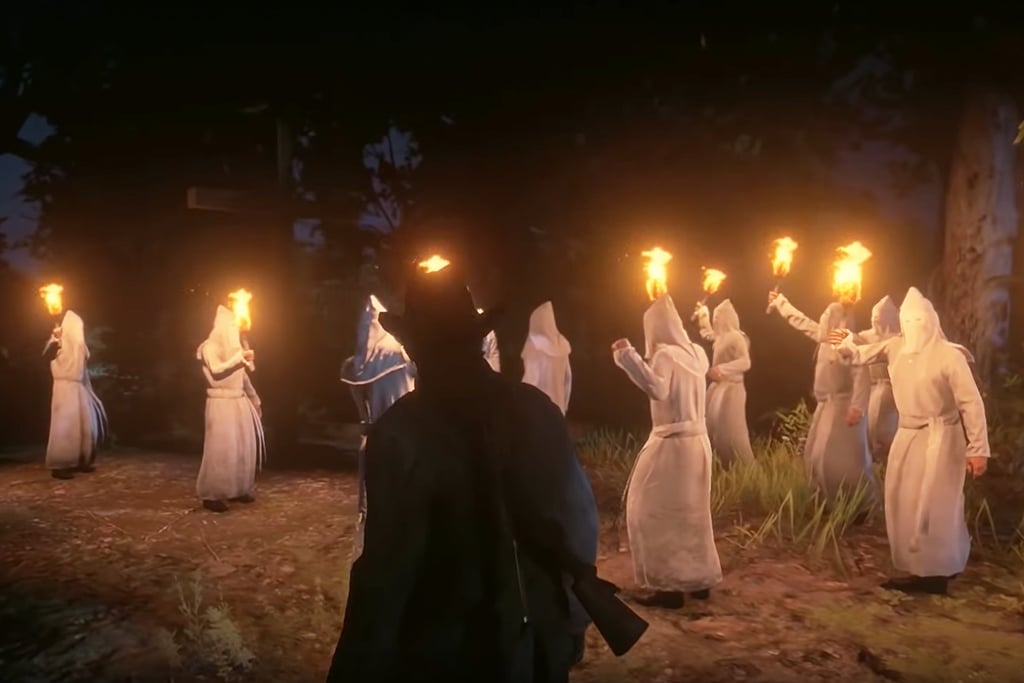
It is hyper-violent, there’s no shying away from that. It’s a game where you can feed people to alligators, murder, steal, and commit countless atrocities. But it also feels like the first game to connect and question that to character, story and the players experience.
Complex storytelling has been evident and covered in depth for a while now — The Last of Us, God of War, The Walking Dead — but Rockstar, in particular, has been an interesting company when it comes to violence. Grand Theft Auto 5, for example, felt almost like a tongue in cheek joke, covered in satire.
I remember laughing out loud a couple of times in the game when it felt that Rockstar was speaking to the player. ‘You are messed up for liking this game.’ But it was just that, a little giggle and a passing moment. At its core, it wasn’t carried through with the story or the characters. There was little consequence.
Is Dutch looking for the ‘way out’ or is it just another excuse to motivate the cycle of violence?
Red Dead Redemption 2, even from the first announcement trailer, felt different. It’s a long, slow descent into impending doom for our lead character. This path was not of the players making but already set, but the actions along the way connect to this trajectory. As Arthur questions the decisions so does the player and in the end, and it leaves a real mark.
You start on the run, a botched job not in your control. It was the take to end all takes but instead, cost members of the Van Der Linde Gang their lives and pushed the survivors into a fight for survival. The leader, Dutch Van Der Linde as a character is the perfect counter to Arthur. His motivations of violence all fuelled by the validation of doing it for the ‘family’, the gang. His charm and confidence are hard to argue with, a true leader. You know Arthur has never questioned this logic.
This changes though. Robbery after robbery, murder after murder, the hole you’re in gets bigger and bigger. Arthur questions Dutch’s motivations and the charm and confidence wash away. Is he looking for the ‘way out’ or is it just another excuse to motivate the cycle of violence?

A master artist weaves the elements of the format at their disposal together. Rockstar’s game design is just one of these elements that aides the narrative. The slow burn and time to think aren’t just for fun; it has a purpose. With limited options to fast travel and skip ahead, it leaves the player alone. The game would prefer you to travel the map, ride through the landscape, take in everything. Giving you time and space to contemplate your actions, those taken and those to come.
Did you see a chance to make an extra buck and rob the General Store? Did an innocent bystander get in the way? It usually is just glossed over, a quick load to the next mission, but here you sit with it. The stolen money in your pocket, the blood of those who got in the way, rests very much on your hands.
The detail in this game is truly a spectacle, even down to a side activity like hunting and providing for the camp. The Gang’s camp is designed to reward players who provide for the others — bringing in food for the camp playing the most significant part. Hunting game is a necessity, and small detail in its design helps bring violence to the front once more. Much like the game edging you away from skipping time in travel, when hunting the game does not let you skip the skinning of the animal. So even though you’re providing for the camp, there is cost and consequence to those actions.
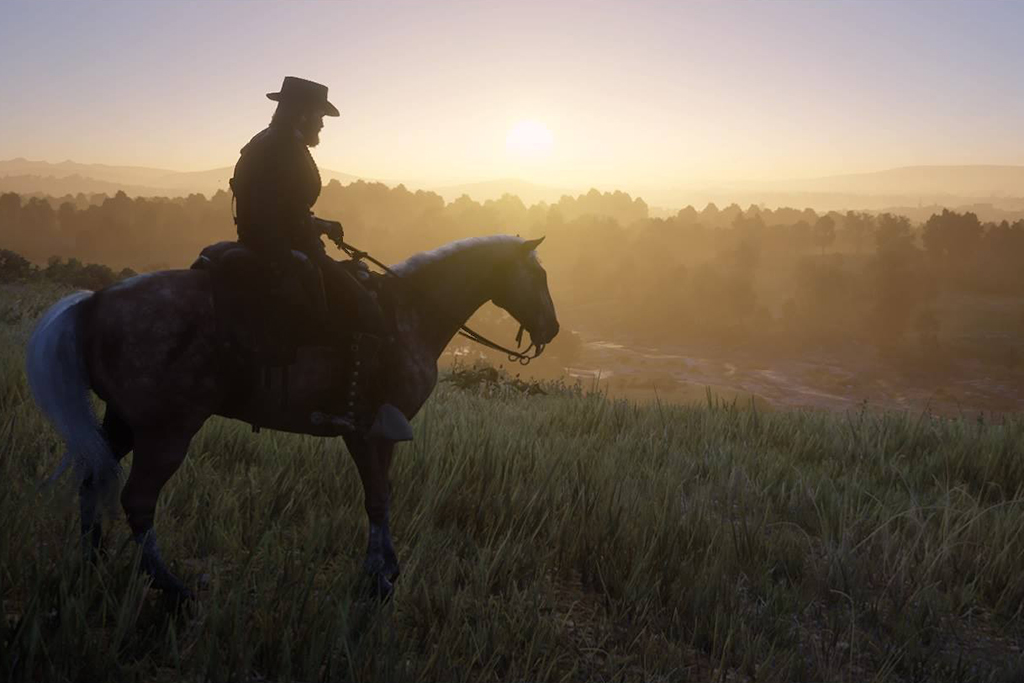
The game never lets up on the core themes. Even side missions that seemed disconnected weave into Arthur’s struggle, but it’s the contrast of their outcomes that makes it so striking. Without completely spoiling them, two stand out. One ‘Charlotte the Widow’ and the aptly named ‘Do Not Seek Absolution’. Rockstar makes no definite statement on good or bad, right or wrong. Just because you make the right decision, in the end, doesn’t undo a previous wrong action. But on the flipside Arthur’s skillset and violence, although in a different context can impact others positively.
It’s this nuance and mastery that leads Arthur and us to a fitting conclusion, a violent sum of all its parts. Your actions in-game do impact the outcome, but only slightly. What stays was the journey that took you there, and it’s one I look forward to jumping in to again. It’s easy to cast a video game aside as mindless entertainment, but this isn’t that game. So, if you haven’t, play through the violent story of Arthur Morgan and the Van Der Linde Gang. And then see what you think.
Tom Phillips is an Adelaide-based writer and producer who makes things up and puts them on paper. He tweets at @phillipstw